Flexo Printing Machine
Why Choose Us
Experienced and Professional Team
Our team is made up of experienced professionals who are committed to providing the best services and support to our clients.
High-Quality Products
We produce high-quality packaging machinery that meets international standards. Our machines are durable, reliable, and easy to operate.
Fast Delivery
We understand the importance of timely delivery, and we are committed to delivering our products within the shortest time possible.
Competitive pricing
They offer competitive pricing for their products and services, making them a cost-effective solution for your machinery needs.
The flexo or flexographic printing press is used commonly in the food packaging industry. The flexo or flexographic press is commonly associated with the plastic industry as many of the food packaging products use plastics. Besides the food packaging industry, the flexo printing press is also associated with industries including paper bags, carton and cardboard box, medical packaging, sanitary product labels, and the diaper industry. In recent years the flexo printing press is also found in the process for printed electronics manufacturing such as RFID, OLED lighting, functional substrates, circuit boards, and sensors.


Rint Quality
In flexography, you don’t need special coatings to ensure quality across a wide variety of substrates. No special coatings mean reduced cost per unit. Most other printing solutions may not have compatibility with as many substrates as a flexographic printing machine does.
Production Rate
Despite the hi-tech innovations in the industry, Flexo print process is still considered and proverb to be faster than other processes. Flexographic printing machines built in 2000 to 2002 delivered 150 to 300 ft./m (FPM) on average where 400 FPM is viewed as an acceptable speed.
Versatility of the Process
From textile printing to label printing and everything in between, a Flexographic printing machine allows businesses to diversify their overall market appeal and stay relevant in competition. Packaging printing is another significant field of application.
One-Off Cost for Plates
With proper maintenance, a Flexo print plate can be reusable which makes it easy for printing businesses to handle repeat orders using only a few overheads. You can compare this with digital printing, especially for the part where you need to invest time in the setup and design. Flexo printing becomes useful on jobs that involve labour-intensive yet short volume.
Flexibility from Conversion
Many flexo presses these days come with the facilities for in-line conversion which reduces the cycle time drastically. Reduced cycle time means that you can complete most print volumes in one pass. You can integrate a good number of other in-line processes into the Flexo printing process, which include cold and hot foil, lamination, silk screen, digital print, booklet and RFID insertion, multi-layer, reverse side, and variable data print.
Types of Flexo Printing Machine
CI Flexo Press
The characteristics of the CI flexo press is in its impression system. CI stands for central impression. The CI central drum is a big circular drum in the center of the printing decks. Each printing deck surrounds the CI and each of the printing plate pressure against the CI central drum for its needed print pressure. The substrate lays on top of the CI central drum throughout the printing process. This type of design mechanism enables the CI flexo printing press to hold a tighter registration and maintain a better control on the substrate’s tension. Therefore, allowing for better print quality and high printing speed.
In-line Flexo Press
The flexo printing is sometimes integrated with other in-line processes for efficiency. For instance, combined with processes such as extrusion, coating, laminating, die-cutting, embossing, slitting, sheeting, and bag making. This in-line application is found in the production of products that do not require the maximum printing speed and allows for looser print registration control. At the same time the print quality requirement is not that high. Fast Food industry like McDonald's, Burger King, KFC is a group of high-frequency in-line flexo press users.
Stack Flexo Press
Stack flexo press is similar to the CI flexo press but has an independent impression roller at each print deck instead of a CI central drum in the center. The stack press is a more economical choice if the printer is not seeking for the best print quality at maximum speed. One of the benefits of the stack flexo press is its capability to perform both surface print and reverse print in one pass, as it has its independent set of impression rollers at each deck.

Application of Flexo Printing Machine
Food packaging
Flexographic printing is quick drying and able to use non-toxic inks. These factors make flexographic printing desirable in the printing of food packaging. It can basically be used on packaging like milk cartons, beverage containers, food containers, as well as disposable cups and containers.
Medical packaging
Since flexography is food safe with the right ink, it can also be used to print packaging for medicines and other medical supplies. Flexographic printing can be used on foil wrappers, hygienic bags, plastic, and cardboard packaging.
Brown corrugated boxes
Flexographic printing’s ability to print on a wide variety of substrates and surfaces make it an ideal method for printing on brown corrugated boxes used in shipping and storage businesses.
Flexible packaging
The ability to print on flexible, non-rigid materials makes flexographic printing useful when printing on rolls of material used for plastic and paper bags. Flexographic printing is an ideal choice for industrial converters that make printed plastic and paper bags.
Maintenance Tips for Flexo Printing Machine
Keep the machine clean
Clean the machine regularly to prevent dust and debris build-up. This can be done by wiping down the machine with a soft, dry cloth and using compressed air to blow dust away from machine parts.
Lubricate machine parts
Lubricate the moving parts of the machine, such as bearings and gears. This can be done by applying a few drops of lubricant to each part periodically.
Check and adjust tension settings
Check the tension of the press and adjust the settings if needed. This can be done by tightening or loosening the tension roller.
Check and adjust alignment
Check the alignment of the press and adjust if needed. This can be done by adjusting the position of the plate cylinder or the anilox cylinder.

Certifications

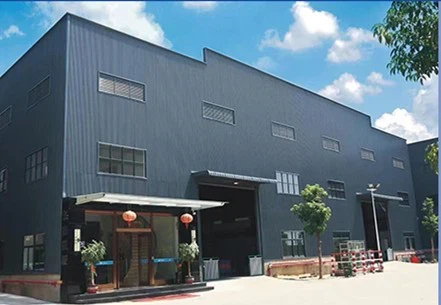
Our Factory
We are special in soft packaging& printing machinery, including stretch film making machine , film blowing machine,plastic bag making machine, flexo printing machine, recycling machine, slitting machine, filling machine etc.