


Polybag Manufacturing Machine
WISDOM MACHINERY is famous brand in the world, We are special in soft packaging& printing machinery, including stretch film making machine , film blowing machine,plastic bag making machine, flexo printing machine, recycling machine, slitting machine, filling machine etc.
we are already sold to more than 168 country, such as: Hungary , USA,Mexico, Canada, Argentina, Brazil,Chile,Ecuador, Paraguay, Colombia, Peru, korea,malaysia, india,thailand, bangaladesh, phillppines, pakistan, Turkmenistan, Azerbaijan, Armenia, Indonesia. Iran , Saudi arabia, Syrian, Jordan, Lebanon, Palestine, kosovo, Israel.
Why Choose Us
Experienced and Professional Team
Our team is made up of experienced professionals who are committed to providing the best services and support to our clients.
High-Quality Products
We produce high-quality packaging machinery that meets international standards. Our machines are durable, reliable, and easy to operate.
Fast Delivery
We understand the importance of timely delivery, and we are committed to delivering our products within the shortest time possible.
Competitive pricing
They offer competitive pricing for their products and services, making them a cost-effective solution for your machinery needs.


The implementation of automation in the production of plastic bags has significantly transformed the manufacturing process. This advancement employs sophisticated technologies to substantially diminish the necessity for manual intervention. As a result, it markedly decreases the potential for human error and notably enhances the efficiency and output rate. Automated systems in this domain ensure a heightened level of uniformity and excellence in the end products. These state-of-the-art machines are instrumental in achieving a swift and consistent production flow, thereby greatly improving both the speed and the overall quality of the plastic bags produced.
The Significance of automation in plastic bag production
The implementation of automation in the production of plastic bags has significantly transformed the manufacturing process. This advancement employs sophisticated technologies to substantially diminish the necessity for manual intervention. As a result, it markedly decreases the potential for human error and notably enhances the efficiency and output rate. Automated systems in this domain ensure a heightened level of uniformity and excellence in the end products. These state-of-the-art machines are instrumental in achieving a swift and consistent production flow, thereby greatly improving both the speed and the overall quality of the plastic bags produced.
Benefits in mass production
In the arena of mass production, plastic bag making machines, operating at impressive cycles per minute (CPM) demonstrate, exceptional prowess. Engineered to generate substantial volumes of bags, these machines maintain unwavering quality standards, adeptly satisfying the requisites of diverse sectors including retail, food services, and healthcare. Their capability to efficiently produce bags in high quantities, coupled with a steadfast commitment to consistency, positions them as indispensable assets in industries where reliability and volume are paramount. This proficiency not only streamlines the production process but also ensures that the output meets the stringent quality criteria essential in sectors that demand precision and durability.
Adapting to market requirements
These machines exhibit remarkable adaptability, adept at fabricating bags in a multitude of sizes and designs, thereby aligning with the dynamic market requirements. This versatility empowers producers to precisely tailor their output to meet specific consumer preferences and swiftly adapt to evolving market trends. Their ability to modify bag dimensions and aesthetics with precision ensures that manufacturers can respond promptly and effectively to the diverse and changing demands of the market. This adaptability not only enhances market responsiveness but also significantly contributes to customer satisfaction and business agility.
Friendly long term cost
Despite the initial capital outlay, the enduring cost advantages of plastic bag making machines are substantial. These machines are characterized by their robust durability, high operational efficiency, and minimal maintenance needs, factors that collectively assure a favorable return on investment over an extended period. Their enduring performance and reliability, coupled with reduced downtime due to maintenance, translate into significant long-term cost savings. This economic efficiency is a critical factor for businesses aiming to optimize their investment in production equipment while ensuring consistent, high-quality output.
Types of Polybag Manufacturing Machine
Pouch Bag Making Machine
The Pouch Bag Making Machines represent a quintessential tool in the fabrication of a vast spectrum of bag types, with a particular emphasis on the production of three-dimensional pouches. These mechanisms are distinguished by their multifaceted capability to produce a diverse range of pouch bag styles, extending from elementary flat bags to the more intricate stand-up pouch configurations.
The fundamental operational paradigm of these apparatuses entails the transformation of a continuous plastic film roll into bags, executed with precise cutting and sealing to achieve the desired dimensions. The advanced iterations of these machines are adept at integrating additional features such as zip locks or spouts, custom-designed to meet specific product requisites.
These pouches are not only visually enticing when displayed on retail shelves but also demonstrate exceptional sealing robustness. This robustness is crucial in maintaining product safety and extending its shelf longevity.
Garbage Bag Making Machine
The Garbage Bag Making Machine has been meticulously engineered to facilitate the production of robust and resilient garbage bags, integral to both domestic and commercial environments. These machines, crafted with precision engineering, embody complex mechanisms that include perforation, sealing, and cutting capabilities. They are proficient in manufacturing a broad spectrum of bag types, from conventional garbage bags to those enhanced with drawstrings, thereby augmenting user convenience and functional efficiency.
The fabrication process of these bags commences with the extrusion of plastic material, proceeding to precise cutting and sealing operations to produce bags tailored to specific dimensions and functional attributes. These bags can be configured into roll forms, both coreless and with a core, or alternatively, can be methodically folded through an integrated folding system. The machine's ability to process diverse material thicknesses and types, including the utilization of recycled plastics, not only highlights its versatility but also its commitment to environmentally sustainable practices.
T-Shirt Bag Making Machine
The T-Shirt Bag Making Machine stands as a beacon of innovation within the retail packaging industry, celebrated for its adeptness in crafting 'T-shirt' style bags that seamlessly blend durability with user-centric convenience. This apparatus is lauded not only for its remarkable operational efficacy but also for its capacity to produce bags characterized by exceptionally sturdy seams and handles, an attribute that is quintessential for the reliable transportation of groceries and a variety of retail goods.
Incorporating an automated T-shirt bag punching mechanism, these machines initially employ a thermal knife to precisely cut the film to specific dimensions. Subsequently, a robust heat sealing process is applied to the bottom, followed by perforation, ensuring the bags can be conveniently torn off. The punching equipment meticulously shapes the distinct T-shirt bag handles at the top of the film, accompanied by the creation of a pair of rectangular apertures, and concludes with a secondary sealing in the handle area, thus crafting a resilient T-shirt bag.
Bag on Roll Making Machine
The Bag on Roll Making Machine stands at the forefront of producing a myriad of disposable bags presented on a continuous roll, including, but not limited to, garbage bags, freshness-preserving bags, and an array of retail and shopping bags. This machinery excels in the continuous production of large quantities of bags, methodically winding them into rolls for efficient distribution and usage. It features a sophisticated, precision-engineered perforation system, ensuring that each bag can be effortlessly detached from the roll while maintaining its structural integrity. This functionality is particularly beneficial in high-throughput environments such as supermarkets or public facilities, where the swift and uninterrupted dispensation of bags is crucial.
The core functionalities of the Bag on Roll Making Machines encompass the loading of raw material rolls, film blowing (in scenarios where the production process includes the creation of plastic film), bag fabrication (inclusive of cutting and sealing processes), and the subsequent rolling of the bags. By adjusting the machine's settings, manufacturers can alter the sizes, width, and other specific characteristics of the bags. This adaptability allows for the production of both compact produce bags and larger, more durable garbage bags.
Bottom Seal Bag Making Machine
The Bottom Seal Bag Making Machine epitomizes a quintessential innovation in the realm of plastic bag manufacturing, excelling in the fabrication of bottom-sealed bags. It employs state-of-the-art heat-sealing technology, executing with precision the sealing of the bag's bottom, while maintaining an unsealed top for user convenience. This apparatus is designed to seamlessly integrate into both small and large-scale production settings. Its robust architecture renders it exceptionally suitable for the production of heavy-duty bags, a critical feature in scenarios demanding high durability and extended bag longevity.
At the heart of its functionality lie several pivotal components: a sophisticated film roll loading system, advanced mechanisms for film traction and guidance, along with units dedicated to meticulous heat sealing and cutting. These elements collectively enable the machine to adeptly apply both heat-seal and cold-cut techniques, thus accommodating a variety of materials such as high-density polyethylene (HDPE), low-density polyethylene (LDPE), and polypropylene (PP). This material versatility is indispensable in industrial contexts that necessitate the secure containment and transport of substantial or voluminous items.
Side Seal Bag Making Machine
The Side Seal Bag Making Machine epitomizes a pinnacle in specialized machinery, specifically engineered for the fabrication of side-seal bags. Distinct from its bottom-seal counterparts, this apparatus executes its function by effectuating seals along the lateral aspects of the bags. Owing to its distinctive production methodology, these side-seal bags invariably exhibit enhanced vertical tensile strength, rendering them eminently suitable for encapsulating a diverse array of products, ranging from lightweight to moderately heavy items. Thus, it adeptly caters to the multifaceted demands of the ever-evolving packaging industry.
The principal components of the Side Seal Bag Making Machine encompass an array of systems, including apparatus for film roll loading, film traction and guidance, sealing units, precision cutting devices, and state-of-the-art control systems. These machines are intricately designed to expedite the production of a high volume of uniform side-seal bags, boasting adjustable features that can accommodate a multitude of sizes and widths. The elevated degree of automation and versatility ingrained in these machines renders them an optimal selection for a broad spectrum of packaging applications, offering unparalleled efficiency and adaptability to manufacturers.
How Are Plastic Bags Made?


Plastic bags are virtually everywhere and are a part of everyone's daily life, but have you ever wondered "how are plastic bags made?" Most people are surprised to learn the highly technical and complicated process of making a plastic bag.
Every year, approximately 1 trillion plastic bags are made - primarily because they are versatile and cheap. Most importantly, plastic bags can be recycled over and over to create valuable post-consumer recycled (PCR) resins, which can be turned into PCR can liners and a host of other products. Let's take a closer look at how plastic bags are made as well as a cost-effective alternative to using virgin resins in plastic bag manufacturing.
Plastic Bag Manufacturing Starts with Raw Material Extraction
The first step of making plastic bags is to extract the raw material. This material - polyethylene -can be derived from either cracked natural gas or refined oil. Because these hydrocarbons are located below ground, they must be reached and extracted through the use of drilling wells.
The Refinery
This refined oil or cracked natural gas is then transmitted to a refinery. When at the refinery, petroleum is separated into varying densities. This allows the oil that is required for the manufacturing of plastics to be extracted. The gas or oil is pressurized and superheated to make sure pure polyethylene chains are isolated. It's vital to isolate these chains so they can be polymerized to form resin pellets of pure plastic.
Varying amounts of pressure and heat will be used to manufacture resin pellets of different densities, which may be used for anything ranging from plastic shopping bags to grocery bags. For instance, grocery bags are commonly made high-density polyethylene, which has a higher tensile strength than plastic films made from low density polyethylene (LDPE) or linear low density polyethylene (LLDPE).
Plastic Film Extrusion
Plastic film extrusion is the process of manufacturing raw pellets. It involves superheating and pressurizing raw LDPE, HDPE, or LLDPE plastic pellets to create a consistent molten liquid. Once the liquid is created, the resin is forced into a circular die. Then the hot resin is blown outward or upward to create a thin, long balloon of very pliable plastic film.
The plastic bubble cools as it further expands, and it encounters several rollers that stretch it into very thin sheets, which will be the bag walls. The sheets are then rolled onto two individual flat beds and moved into the printing machine.
Completing the Plastic Bag Manufacturing Process
The last step starts with pressing the two printed sheets together to create the sides of the bag. The plastic can then be wound and cut to the most suitable size and shape based on the actual use or application for the bag. This is where additional customizations can be added, such as perforations.
The bag manufacturers should reap the efficiency from every level of their manufacturing method. All at once, they need to make certain the bags created should meet the demands and needs of the customers.
The Bag making machine produces thousands of bags in just one day. These bags can be used for several types of items and products. At present, the bag manufacturers are making use of automatic Bag making machine. This excellent machine incorporates the latest technological due to which it works competently. It needs operator intervention to refill the raw material and eliminate the finished items. The bag making has specific operating procedures.
Feeding Operating Procedure
There is a section of feeding present inbag making machine. In this section, the rod-fed bendable bundling film is positioned on the feeder roll. These rollers help move the film through the equipment to complete the important functions. Feeding operation is an intermittent operation. The dancer arrangements are utilized in this machine to maintain continuous pressure on the web film. The dancers and feeders are important for maintaining the tension in the feed.
Sealing Operating Procedure
At the time when feeding stops, then the machine starts sealing and cutting immediately. In the section of sealing, the sealing temperature measured components are brought into contact with the film for a particular time to properly seal up the material. The time and temperature of sealing are contingent upon the material type. Both of these things should be maintained constantly for diverse machine speeds. The sealing component configuration and the format of the machine are contingent upon the sealing stated by the design of the bag. In many formats of the machine, the sealing is finished by cutting and trimming. Both these operations are carried out right after the feeding ends. It is not possible to carry out these operations during feeding.
Cutting And Stacking Operating Procedure
The cutting and stacking operating procedures are carried out after sealing. However, these procedures are identical to sealing. They would evaluate the perfect format of the machine. By these basic functions, additional operating procedures are required as well. They include punch, zipper, spout, tamper proof seal, and handle punch. There are diverse accessories added into the bag making machine that is used to carry out extra operations.
Control Mode of Polybag Manufacturing Machine and Maintenance
The reason why plastic bag making machine can complete the bagging process efficiently and accurately is that there are systematic control methods, and corresponding control methods for different actions to ensure the accuracy and stability of the operation. The specific ways are as follows:
Firstly, the discharging switch is opened, and the storage motor is controlled by the storage photoelectricity to store the quantitative materials. At the same time, when the heating control switch is turned on, the hot knife can be heated through the thermostat to achieve the temperature required for operation.
Secondly, the stepper motor can drive the action of raw materials. The white bag sealing machine determines that the stepper motor stops at a fixed number of steps to achieve fixed length control. The color bag sealing machine realizes positioning control by detecting the corresponding signal of the electric eye to stop the stepper motor. The effect is very good.
When the stepping motor stops running, the three-phase asynchronous motor will also drive the hot knife to seal and cut. When the number of bags is set, the bag-making machine can enter the whole bag-making process, so that the whole bag-making process of the carry bag making machine is completed.
Points for attention in daily operation of bag making machine:
● Develop the good habit of checking the temperature self-control of bag-making machine is intact, the heating apparatus is intact, and the heating temperature of each point should be adjusted in time within the scope of the index; if there are any abnormalities, it should be solved in time.
● Check the traction speed of bag making machine and control the thickness of film; ensure that no deviation is done in the production process, and improve the quality as far as possible.
● Observe whether the film thickness is uniform, whether the folding diameter meets the standard, and whether the blowing width is deviated; and adjust it appropriately
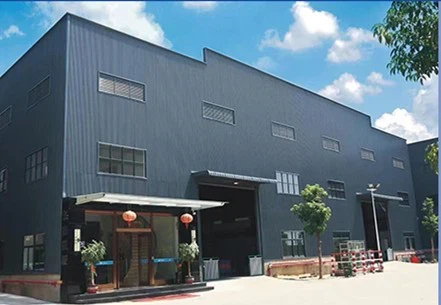
Our Factory
WISDOM MACHINERY is famous brand in the world, We are special in soft packaging& printing machinery, including stretch film making machine , film blowing machine,plastic bag making machine, flexo printing machine, recycling machine, slitting machine, filling machine etc.
Our Certificate

FAQ
Hot Tags: polybag manufacturing machine, China polybag manufacturing machine manufacturers, suppliers, factory
Previous
Side Sealing Bag Making MachineYou Might Also Like


Send Inquiry